Most investors hear “service accommodation” and immediately think higher nightly rates, better yields, and a straightforward upgrade on a standard buy-to-let. Sometimes they’re right. But the investors who’ve actually stress-tested this model — run the numbers through vacancy periods, seasonal dips, and platform fees — tend to come back with a more nuanced view.
So let’s look at what service accommodation really offers, where it genuinely outperforms, and where the fundamentals of traditional residential investment still hold their ground.
What Is Service Accommodation, and Why Are Investors Interested?
Service accommodation refers to fully furnished short-term rental properties — Airbnb, Booking.com, corporate lets — where guests pay nightly or weekly rates rather than a fixed monthly rent. The appeal is straightforward: nightly rates in a well-located Manchester apartment or Leeds city centre flat can produce gross yields that a standard assured shorthold tenancy (AST) simply can’t match.
Yield compression — the narrowing gap between what a property costs and what it earns — has been a persistent challenge for buy-to-let investors across the UK over the last decade. SA looks like the antidote. In some cases, it is.
But here’s what the brochure tends to leave out.
Stress-Testing the SA Model: Where the Cracks Appear
Stress-testing means deliberately asking: what happens when things don’t go to plan?
A traditional AST gives you predictable monthly income. Your property in Nottingham, Leeds, or Liverpool generates rent whether it’s January or August. SA doesn’t work that way. Occupancy fluctuates with seasons, local events, and platform algorithm changes. A property averaging 85% occupancy in peak months might drop to 40-50% in quieter periods.
Layer on top of that: platform fees of typically 15-20%, professional cleaning between stays, higher utility costs, furnishing replacements, and the regulatory headwinds that are already reshaping this market. Local councils across England are tightening planning rules around short-term lets. Scotland has already introduced licensing requirements and England is following. If you’re building an SA strategy without factoring in potential licensing costs and restrictions, you’re working with incomplete data.
The illustration: An investor buys a two-bed apartment in Birmingham for £180,000. On Airbnb, they achieve £95 per night at 75% annual occupancy — roughly £26,000 gross. Subtract platform fees, cleaning costs, utilities, insurance, management, and furnishing depreciation, and net returns often land closer to a well-managed HMO or premium AST in the same postcode.
The application: Before committing to SA, model three scenarios — optimistic, realistic, and pessimistic occupancy — and compare each against a standard residential let in the same area. If SA only wins in the optimistic column, the fundamentals aren’t strong enough.
Where SA Genuinely Has the Edge
This isn’t an argument against service accommodation. In the right location, with the right setup, it’s a legitimate high-yield strategy.
Corporate lets, where businesses book properties for contractors, consultants, or relocating staff, offer SA-level income with something closer to AST-level stability. The Midlands and Yorkshire, particularly around business parks, hospitals, and universities, have consistent and well-documented corporate demand. This is where SA genuinely earns its place: professional occupancy, not just leisure tourism.
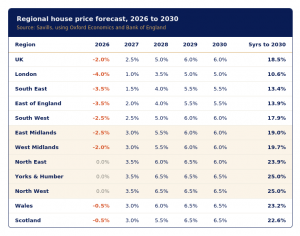
Capital appreciation is also a factor. Well-located SA properties in Manchester and Liverpool city centres tend to attract a premium on resale precisely because they come with a proven income history. That combination of yield and appreciation is what serious portfolio-building actually looks like.
An SPV — a limited company set up specifically to hold property — is increasingly standard practice for SA investments. The tax efficiency, particularly around mortgage interest relief, makes the numbers materially better for higher-rate taxpayers. If you’re running SA as a sole trader, you’re likely leaving money on the table.
Portfolio Resilience: SA as Part of a Strategy, Not the Whole Strategy
The honest answer to the “ultimate strategy” question is that there isn’t one. Portfolio resilience comes from diversification — not from concentrating on a single model and hoping the conditions hold.
The investors who navigate market cycles well tend to hold a mix: standard ASTs for income predictability and SA assets in locations where the demand fundamentals are genuinely strong and sustainable. Each performs differently under different economic conditions, and that spread is what protects long-term returns.
Service accommodation is a tool. Used well, in the right location, with the right management infrastructure, it’s a powerful one. Used without proper stress-testing — chasing headline nightly rates while ignoring operational costs and incoming regulation — it can underperform a straightforward buy-to-let by a significant margin.
The question isn’t whether SA is the right strategy. It’s whether it’s the right strategy for your goals, your timeline, and your risk appetite.
If you’d like to discuss this strategy or any other with the team, then get in touch today: https://fraterpropertypartners.com/work-with-us/