Last reviewed: June 2026, against ONS, Land Registry, LCRCA and Savills data
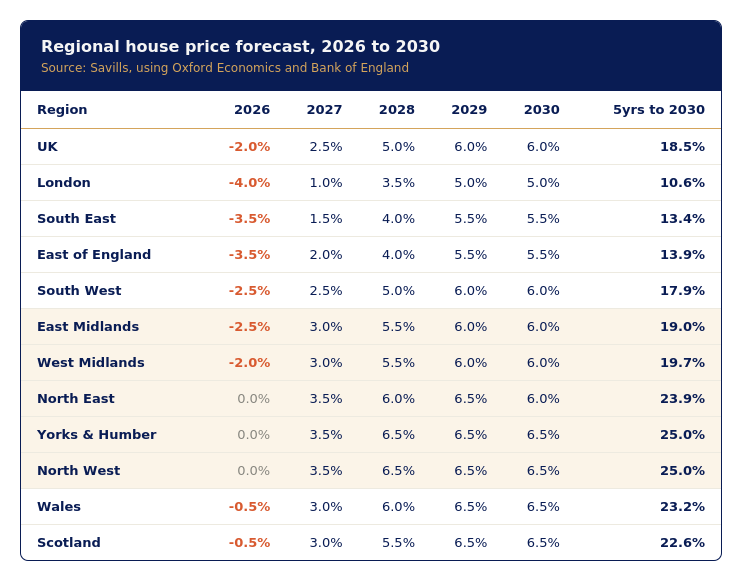
Liverpool City Region’s economy is worth £35 billion, with the Combined Authority forecasting growth to £45 billion by 2035, and is home to over 1.6 million people across the wider region. Savills’ most recent forecast (June 2026) puts North West house price growth at 25.0% over the five years to 2030 — among the joint-highest of any UK region. With a £5.5bn dockside regeneration scheme underway and one of the UK’s most affordable major-city entry points, Liverpool remains a strong fundamentals-driven case for property investment.
Liverpool Economy & Population
Liverpool City Region’s economy is worth £35 billion, with the Combined Authority forecasting growth to £45 billion by 2035.
The city of Liverpool has a population of around 513,000, while the wider Liverpool City Region — covering Liverpool, Sefton, Knowsley, Wirral, St Helens and Halton — is home to over 1.6 million people.
Regeneration & Institutional Investment
Liverpool is centre to a huge £5.5bn Master Scheme from Peel Holdings who previously developed Media City/Salford Quays in Manchester.
Liverpool Waters is a £5.5 billion investment scheme that is transforming areas across the city of Liverpool. Spanning approximately 148 acres, the development features a mix of residential, commercial, and leisure facilities
The Peel group expect the scheme will create up to 20,000 jobs
The scheme is aiming to bring 9,000 homes, 315,000 SqM of Business Space, 53,000 SqM of Hotel & Conference Space.
Connectivity & Transport
Liverpool Lime Street is the city’s main railway station, offering direct, fast connections to major cities.
The Port of Liverpool (operated by Peel Ports) is one of the UK’s busiest ports, strategically important for global trade, and has seen a £400m investment (Liverpool2 terminal), enhancing Liverpool’s global trade capacity.
Liverpool John Lennon Airport is one of the UK’s fastest-growing regional airports, setting a new passenger record of 5.6 million in 2025 and now serving over 70 direct destinations.
Liverpool is served by excellent road connectivity, with motorways (M62, M57, M58) providing direct connections to Manchester, Leeds, and the wider UK motorway network.
The Merseyrail network offers efficient connections across Liverpool’s suburbs.
Employment
Liverpool boasts a thriving economy, serving as a major hub for employment in the North West region.
Employers include:
Unilever: A global consumer goods company with significant operations in Liverpool.
Liverpool University Hospitals NHS Foundation Trust: Manages Aintree University Hospital, Broadgreen Hospital, Liverpool University Dental Hospital, and the Royal Liverpool University Hospital.
Jaguar Land Rover: Operates a significant manufacturing plant in Halewood, employing approximately 4,000 people.
Bristol Myers Squibb: Constructing a new £35 million laboratory in Leasowe, enhancing Liverpool’s status as a life sciences hub.
Universities & Education
Globally recognised University of Liverpool and Liverpool John Moores University attract over 60,000 students to the city of Liverpool.
Liverpool has a strong student retention rate (Top 3 in the country) with professionals attracted to more affordable rental homes than cities like Manchester and Southern locations.
Large businesses, including Jaguar Land Rover, Cammell Laird, and Peel Ports, offer extensive apprenticeship programmes, developing talent locally.
Lifestyle & Amenities
Vibrant Cultural Scene: Famously home to The Beatles and hosting vibrant live music venues like the Cavern Club and the M&S Bank Arena.
Diverse Retail and Dining Options: Liverpool ONE, one of the UK’s largest open-air shopping centres, features over 170 shops, restaurants, cinemas, and entertainment venues. Award-winning restaurants, lively pubs, cafés, and trendy eateries, particularly around Bold Street, Baltic Triangle, and Albert Dock.
Expansive Green Spaces and Recreation: Beautiful parks and green spaces, including Sefton Park, Calderstones Park, and waterfront promenades, ideal for families and recreation.
Liverpool is home to two Premier League football clubs – Liverpool FC and Everton FC – with iconic stadiums like Anfield attracting global tourism.
Previous Growth & Performance
The growth in Liverpool has been strong in recent years and with the significant institutional investment, this should continue due to increased demand.
The average property in Liverpool is still reasonably affordable at just under £174,000 at the start of 2025 which demonstrates room for further growth without prices reaching a point where they are unaffordable for the average couple.
Forecasts for Growth
Savills Capital value forecasts for 2026–2030 predict that growth across the North West will be the highest of any region in the country over the next five years, with both Liverpool and Manchester performing strongly.
Rental growth in Liverpool was the 3rd highest across the UK in thw last 12 months according to the Zoopla Rental Market Report.
Discuss Liverpool investment property with one of the team
Is Liverpool a good place to invest in property in 2026? Liverpool City Region has a £35bn economy, forecast by the Combined Authority to grow to £45bn by 2035. Savills forecasts 25.0% house price growth across the North West over the five years to 2030, while Liverpool remains one of the more affordable major UK cities to buy into.
What regeneration is happening in Liverpool? The largest scheme is Liverpool Waters, a £5.5bn, 30-year dockside regeneration project. Peel submitted a revised masterplan in 2024-25 reflecting changes since the original plan, including Everton FC’s new stadium at Bramley-Moore Dock.
How well connected is Liverpool for investors and tenants? Liverpool John Lennon Airport set a new passenger record of 5.6 million in 2025, with over 70 direct destinations. The city is also home to the Port of Liverpool, one of the UK’s busiest, with ongoing investment in its Liverpool2 deep-water container terminal.
What is Liverpool’s population? The city of Liverpool has a population of around 513,000, while the wider Liverpool City Region — covering Liverpool, Sefton, Knowsley, Wirral, St Helens and Halton — is home to over 1.6 million people.